
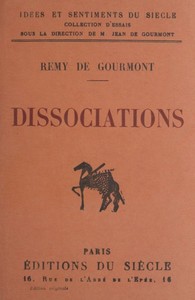
Dissociations by Remy de Gourmont
Dissociations is a strange and wonderful creature. Published in 1899, it sits somewhere between a collection of essays, a philosophical notebook, and a series of poetic rants. Gourmont, a key figure in the Symbolist movement, wasn't interested in telling a conventional tale. Instead, he captured the flickering thoughts of a mind in motion.
The Story
There isn't a plot in the usual sense. Think of it as a walk through a museum of ideas, with Gourmont as your unpredictable guide. One moment he's picking apart the logic of language, the next he's musing on the beauty of decay or the illusions of love. He writes about everything from the ethics of criticism to the nature of sensation. The book is built from short, intense sections—some are just a paragraph long—that feel like sparks flying off a grinding wheel. The 'story' is the journey of his perception, leaping from topic to topic, finding unexpected connections between art, science, and everyday life.
Why You Should Read It
I loved this book for its sheer audacity. Gourmont's mind is a fascinating place to visit. He's cynical, brilliant, curious, and often surprisingly funny. Reading Dissociations feels like having a conversation with the smartest, most opinionated person in a Parisian café, late at night. He challenges you to see the world differently, to question your assumptions about pretty much everything. It’s not always comfortable—some of his views are dated or deliberately provocative—but it’s never boring. The pleasure is in the texture of his thinking and the beauty of his prose, even in translation.
Final Verdict
This book isn't for everyone. If you need a driving narrative and clear conclusions, look elsewhere. But if you're a reader who loves ideas for their own sake, who enjoys writers like Nietzsche, Schopenhauer, or even later fragmented thinkers like Emil Cioran, you'll find a kindred spirit in Gourmont. It's perfect for poets, philosophers, artists, or anyone who enjoys a challenging, idiosyncratic, and deeply personal intellectual adventure. Dip into it, don't rush. Let a few pages simmer in your mind. You might be surprised by what sticks with you.
This historical work is free of copyright protections. You can copy, modify, and distribute it freely.
Thomas Gonzalez
2 months agoInitially, I was looking for a specific answer, but the logic behind each conclusion is easy to follow and verify. A refreshing and intellectually stimulating read.
Barbara Martinez
11 months agoA brilliant read that I finished in one sitting.
Donald Gonzalez
11 months agoExceptional clarity on a very complex subject.
Kimberly Jackson
1 year agoI was skeptical about the depth of this book at first, but the author clearly has a deep mastery of the subject matter. The insights gained here are worth every minute of reading.



John Thompson
2 months agoThe information is current and very relevant to today's needs.