
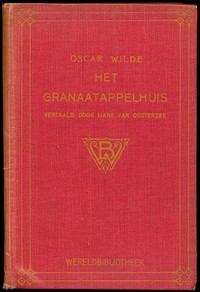
Het Granaatappelhuis by Oscar Wilde
Let's clear something up first: 'Het Granaatappelhuis' is the Dutch title for Oscar Wilde's collection of fairy stories, often published in English as 'A House of Pomegranates'. It contains four longer tales: 'The Young King', 'The Birthday of the Infanta', 'The Fisherman and his Soul', and 'The Star-Child'. Forget simple 'happily ever after'—these are lush, symbolic, and often bittersweet.
The Story
Each tale is its own world. 'The Young King' is about a boy raised by goatherds who becomes king and is horrified by the human suffering behind his gorgeous coronation robes. 'The Birthday of the Infanta' follows a spoiled Spanish princess and a dwarf who dances for her amusement, with a heartbreaking twist. 'The Fisherman and his Soul' is a wild, gothic romance where a fisherman tries to cut away his soul to live with a mermaid. 'The Star-Child' is a dark fable about a beautiful but cruel boy who learns humility through suffering. They're not connected by plot, but by a mood—one of gorgeous surfaces hiding deep, sometimes tragic, truths.
Why You Should Read It
This book surprised me. We think of Wilde as the master of the perfect, cynical quip, but here his prose is lavishly beautiful and deeply sincere. The themes hit hard: the hypocrisy of society, the cruelty hidden behind beauty, and the idea that real love or goodness often requires a huge, personal sacrifice. The characters aren't just good or evil; they're complex. The Young King's crisis of conscience feels very modern. The fate of the dwarf in 'Infanta' is devastating. You see Wilde's famous aestheticism—his belief in art for art's sake—but it's constantly bumping up against his sympathy for the outcast and the poor. It makes for a fascinating, emotional read.
Final Verdict
This is perfect for anyone who loves beautiful writing and stories that stick with you. If you enjoy the moral depth of Hans Christian Andersen but wish the language was richer and more poetic, you'll love this. It's also a must-read for Wilde fans who want to see the serious heart behind the sparkling wit. Fair warning: don't expect cheerful endings. Expect to be moved, maybe a little saddened, and definitely impressed by the sheer power of Wilde's imagination when it's focused on a parable. Keep a cup of tea nearby and prepare to get lost in some of the most gorgeous, melancholy fairy tales ever written.
This work has been identified as being free of known copyright restrictions. Enjoy reading and sharing without restrictions.
Charles Johnson
1 month agoThe methodology used in this work is academically sound.
Matthew Thomas
2 years agoI was skeptical about the depth of this book at first, but the critical analysis of current industry standards is very timely. Definitely a five-star contribution to the field.
Elizabeth Jackson
3 months agoIf you're tired of surface-level information, the author doesn't just scratch the surface but goes into meaningful detail. This should be on the reading list of every serious professional.
Patricia Gonzalez
1 year agoRead this on my tablet, looks great.






Linda Smith
2 months agoThe information is current and very relevant to today's needs.