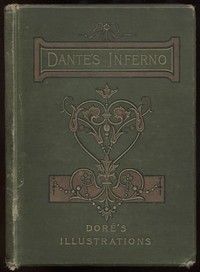
The Divine Comedy by Dante, Illustrated, Hell, Volume 03 — A Closer Reading
Edition facts
For The Divine Comedy by Dante, Illustrated, Hell, Volume 03 — A Closer Reading, the stored edition analysis reports 5,114 words, 23 min estimated reading time, and 1 detected text section.
The text analysis averages about 23.0 words per sentence, while the detected sections provide another way to judge how the source is divided.
Project Gutenberg metadata also associates the work with “Hell -- Poetry,” connecting these edition facts with the source record’s subject description.
Read the complete public-domain text at its original source.
Read on Project GutenbergThe third volume of Henry Francis Cary's translation of Dante's Inferno opens with Canto V, where the pilgrim descends from the first circle to the second. The passage immediately establishes a judicial tone: Minos, the infernal judge, “grinning with ghastly feature,” examines each soul and wraps his tail around himself to indicate the circle of punishment. This mechanical, almost bureaucratic process contrasts with the chaotic storm that follows—a “tempest torn by warring winds” that drives the carnal sinners endlessly. The juxtaposition of order and disorder is a key structural feature of the canto.
Minos as Gatekeeper and Judge
The figure of Minos is introduced with striking physical detail: he “stands / Grinning with ghastly feature” and uses his tail to measure the degree of punishment. This is not a passive gatekeeper but an active judge who “dismisses them beneath, / According as he foldeth him around.” The souls confess all before him, and his tail coils as many times as the circles the sinner must descend. This ritualized judgment gives the reader a clear sense of the infernal hierarchy: each sin has a precise location and intensity. Virgil’s curt reply to Minos—“Wherefore exclaimest? Hinder not his way / By destiny appointed”—reinforces that the journey is divinely sanctioned, a point that will recur throughout the poem.
The Storm of the Lustful
After passing Minos, the pilgrim enters a place “where light was silent all.” The sensory deprivation—silent light—gives way to a cacophony of wailing and a storm that “with restless fury drives the spirits on.” Dante compares the souls to starlings borne by winter winds and to cranes “chanting their dol'rous notes” in long array. These similes emphasize both the multitude and the lack of individual agency: the sinners are swept helplessly. The canto specifies that these are “the carnal sinners, in whom / Reason by lust is sway'd.” The storm is not merely punitive but emblematic of their earthly passion—an externalized representation of inner disorder.
The Catalogue of Famous Lovers
Dante’s guide identifies several souls among the throng: Semiramis, “who made / Liking be lawful by promulg'd decree”; Dido, who “in amorous fury slew herself”; Cleopatra; Helen; and Achilles, “who with love fought to the end.” This catalogue serves multiple functions. It anchors the abstract sin in recognizable figures from history and myth, giving the reader concrete examples. It also establishes a pattern: each figure is defined by a single, fatal passion. The list is selective—only a few names are given—suggesting that the crowd is too vast to enumerate. The mention of Semiramis’s decree hints at the political dimensions of lust, a theme that may reappear in later cantos.
Virgil’s Role as Interpreter
Throughout the excerpt, Virgil acts as both guide and interpreter. He answers the pilgrim’s questions, identifies the souls, and provides moral context. When the pilgrim asks “who / Are these?” Virgil responds with a concise biography of each figure. This dynamic is central to the poem’s didactic purpose: the reader learns alongside the pilgrim. Virgil’s tone is matter-of-fact, never judgmental, which contrasts with the emotional reactions of the pilgrim. The guide’s authority is unquestioned, and his explanations are delivered in a straightforward manner, allowing the poetry’s imagery to carry the emotional weight.
For a first reading, pay attention to how Dante balances systematic structure—the circles, the judges, the categories of sin—with vivid, often violent imagery. The storm of the lustful is both a physical phenomenon and a moral emblem. The catalogue of lovers invites comparison with later encounters, such as that with Francesca, which follows in the same canto. Notice how Virgil’s explanations shape the pilgrim’s (and the reader’s) understanding, and how the poem uses simile to make the supernatural tangible.
Reading the opening of Canto V, I was struck by how Minos coils his tail, assigning each soul its circle with quiet finality. That patient, inevitable judgment reminded me of another set of verses I once lingered over, full of their own slow reckonings. It felt like returning to an old notebook. Poems — Key Ideas to Explore sat nearby, and somehow, both felt like keeping company with a familiar, unnamed ache.
There are no reviews for this eBook.
Record your reading impressions
A brief reflection can help important ideas stay with you longer.